Blue Origin, the space conglomerate founded by Amazon chair Jeff Bezos, has asked the U.S. government for permission to launch a network of more than 50,000 satellites that will act as a data center in orbit.
In a March 19 document filed with the Federal Communications Commission, Blue Origin’s attorneys described “Project Sunrise” as a network of spacecraft that will perform advanced computation in orbit to “ease mounting pressure on U.S. communities and natural resources by shifting energy – and water-intensive compute away from terrestrial data centers.”
Blue Origin’s filing did not describe its plans for the satellites in detail, so it’s hard to know how much computing power the company is aiming to generate in space. It does note that Blue Origin plans to use another satellite constellation it is seeking to build, called Terawave, as a high-throughput communications backbone for the data satellites.
Shifting massive compute to space is attractive because solar energy is free to harvest and, once in orbit, there are fewer regulations restricting corporate activities. Entrepreneurs behind these projects envision a future where AI tools are widespread and imagine that much of the inference work behind them will be outsourced to orbit.
Several companies are already pursuing the idea. SpaceX has filed for permission to launch a million satellites to be used as a distributed data center, while the startup Starcloud has proposed a network of 60,000 spacecraft to the FCC. Google is also developing a concept for a space data center called Project Suncatcher, which will see its partner Planet Labs launch two demo spacecraft next year.
While excitement about space data centers is high in the tech world, the economics of these projects remain challenging. Technology for cooling processors and communicating between spacecraft with powerful lasers will need to be developed and manufactured as cheaply as possible, while scientists are still determining how well advanced chips work on different tasks while exposed to the high radiation environment in space.
A critical area is the cost to launch these computers into orbit, and most are betting that the price of reaching orbit will fall due to SpaceX’s Starship rocket, which is still under development and may see its first 2026 launch next month.
Techcrunch event
San Francisco, CA
|
October 13-15, 2026
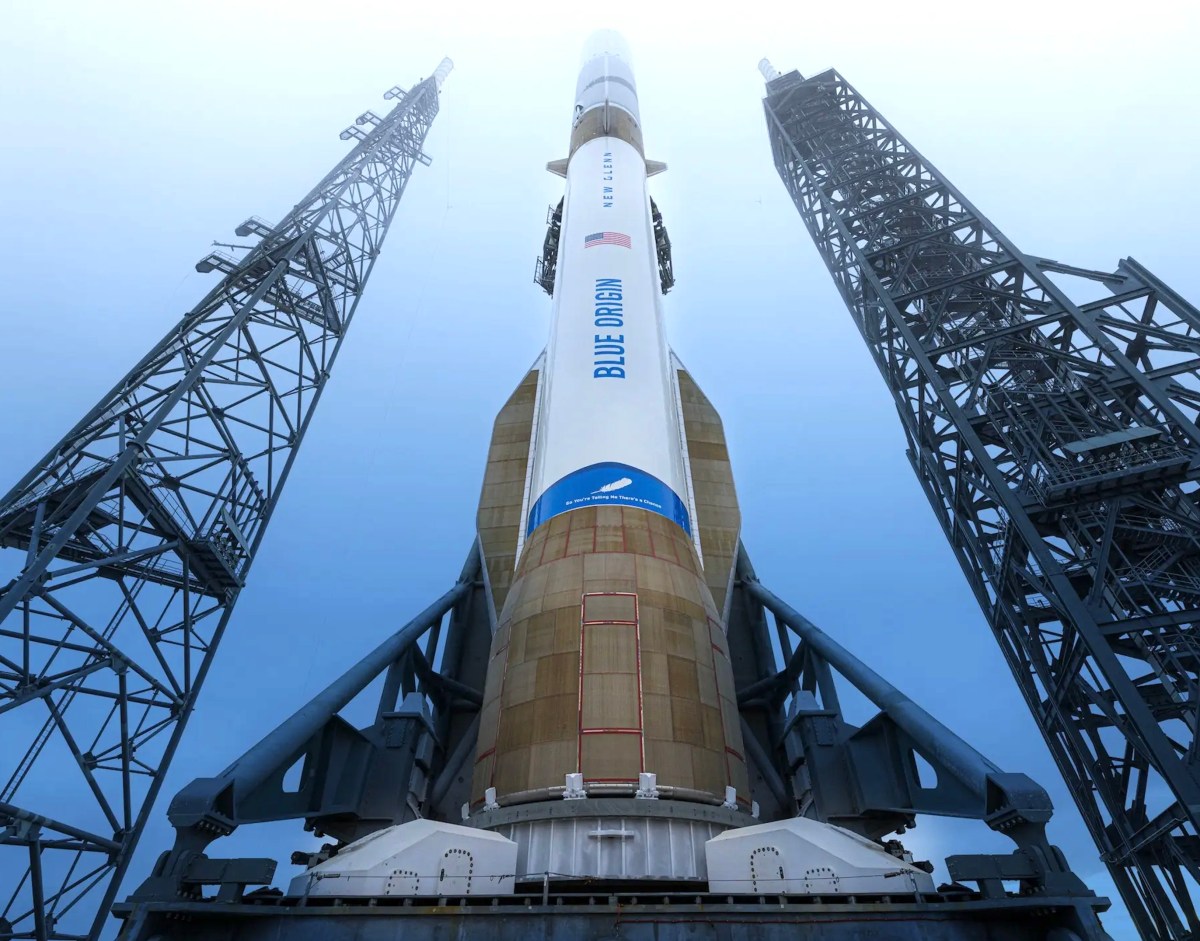
This is an area where Blue Origin, long an also-ran in the rocket business, may have an advantage. Its New Glenn rocket, which first flew last year, is one of the most powerful operational launch vehicles on Earth. If the company can start flying and reusing them at a regular pace, Blue Origin could see the same kind of benefits from vertical integration that allowed SpaceX to dominate space telecommunications with its Starlink network.
Beyond economic and technological challenges, the space environment itself may prove an obstacle. Space in key orbits close to the Earth is getting ever more congested, and adding tens or hundreds of thousands of new satellites will increase concerns about orbital collisions. Meanwhile, burning up thousands of satellites in orbit after they become obsolete, as is standard practice in the industry today, is likely to affect the chemistry of the upper atmosphere, with researchers fretting about harms to the ozone layer.
The filing also lacked details about timing, but experts tell TechCrunch that such projects are unlikely to come to fruition until the 2030s.

