Swish, a Bengaluru-based food delivery startup, has raised $38 million in a new funding round, as the 18-month-old company continues to draw investor interest for its 10-minute fresh food delivery service.
The Series B round, led by Hara Global and Bain Capital Ventures, also saw participation from Accel, Stride Ventures, and Alteria Capital. It values Swish at $139 million post-money, more than double its valuation a year ago, and brings total funding to $54 million.
The funding comes as ultra-fast food delivery remains a challenging business to sustain in India. Larger platforms such as Swiggy, Zepto, and Zomato have in recent months scaled back or shut down their rapid-delivery experiments, citing operational complexity and cost pressures.
Founded in 2024, Swish operates a full-stack business model, owning its kitchens, supply chain, and delivery network, and focusing on dense, hyperlocal clusters with delivery radii of around 1 kilometer. This gives Swish better economics, it says, compared to marketplace platforms that must rely on third-party restaurant commissions.
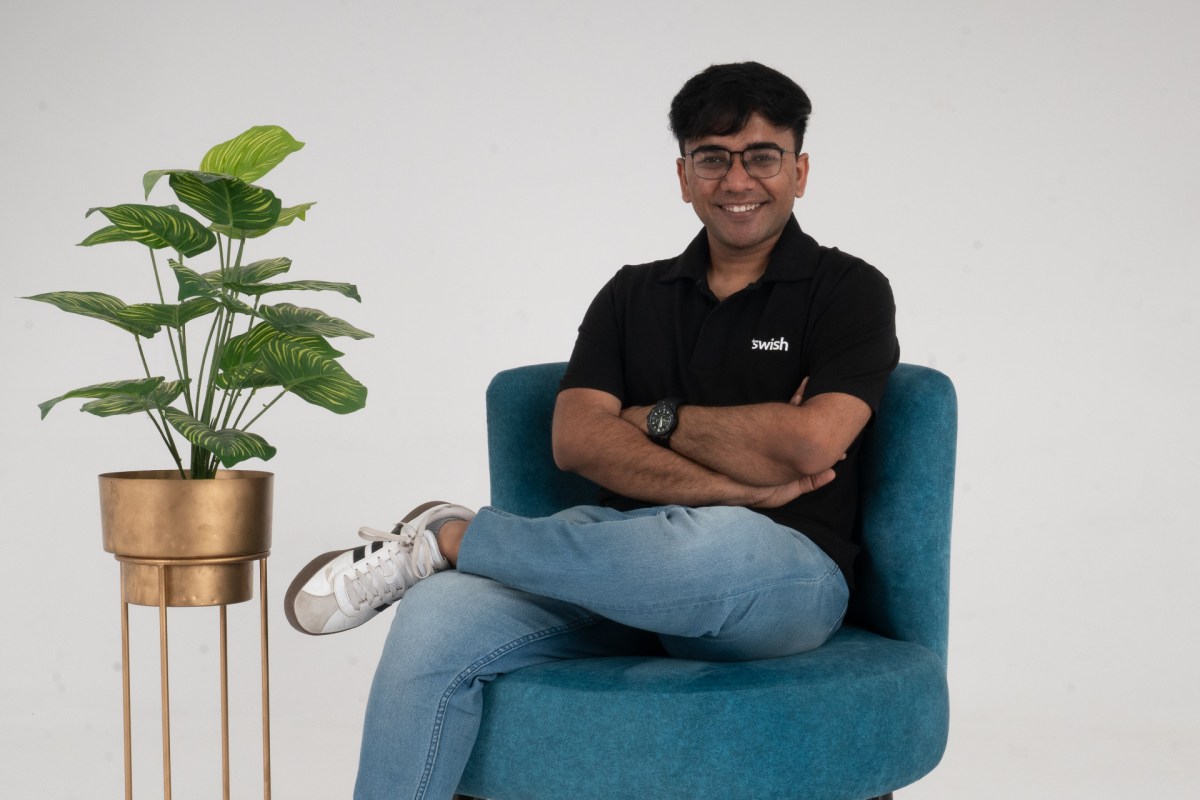
The startup says it is now delivering about 20,000 orders a day, up from roughly 5,000 four months ago, as it expands across 10 micro-markets in Bengaluru. Swish has also focused on automating kitchen operations to support faster delivery and consistency, co-founder and CEO Aniket Shah (pictured above) said in an interview.
“We are very dense, very close to the customer, ensuring that we are able to almost act like a restaurant kitchen, bringing food to your table,” he told TechCrunch.
Swish offers more than 200 items across meals, snacks, and beverages, with an average order value of ₹200 to ₹250 (around $2-$3). It says usage is highly repeat-driven, with top users ordering more than 10 times a month, largely among young urban consumers aged 20 to 35, as it targets multiple daily food occasions from breakfast and tea-time to late-night orders.
Techcrunch event
San Francisco, CA
|
October 13-15, 2026
The startup’s older kitchen clusters have reached profitability, Shah said, although he did not disclose per-order margins.
Swish plans to expand within Bengaluru and into other areas like Delhi-NCR and Mumbai, Shah said.
Its business model, however, remains dependent on dense urban clusters and high-order volumes. So we’ll have to wait and see if investor enthusiasm proves justified, particularly as larger rivals have scaled back their rapid-delivery experiments.

